A table reservation is usually a guest's first contact with a venue for that evening — and it's often handled through a tool with no connection to what happens once the guest actually sits down. A reservation through Qastio is different in one specific way: it's the first step in the same system the guest later uses to order, not a separate tool that closes the moment the booking is confirmed.
What booking looks like, step by step
Why there's no phone call or account
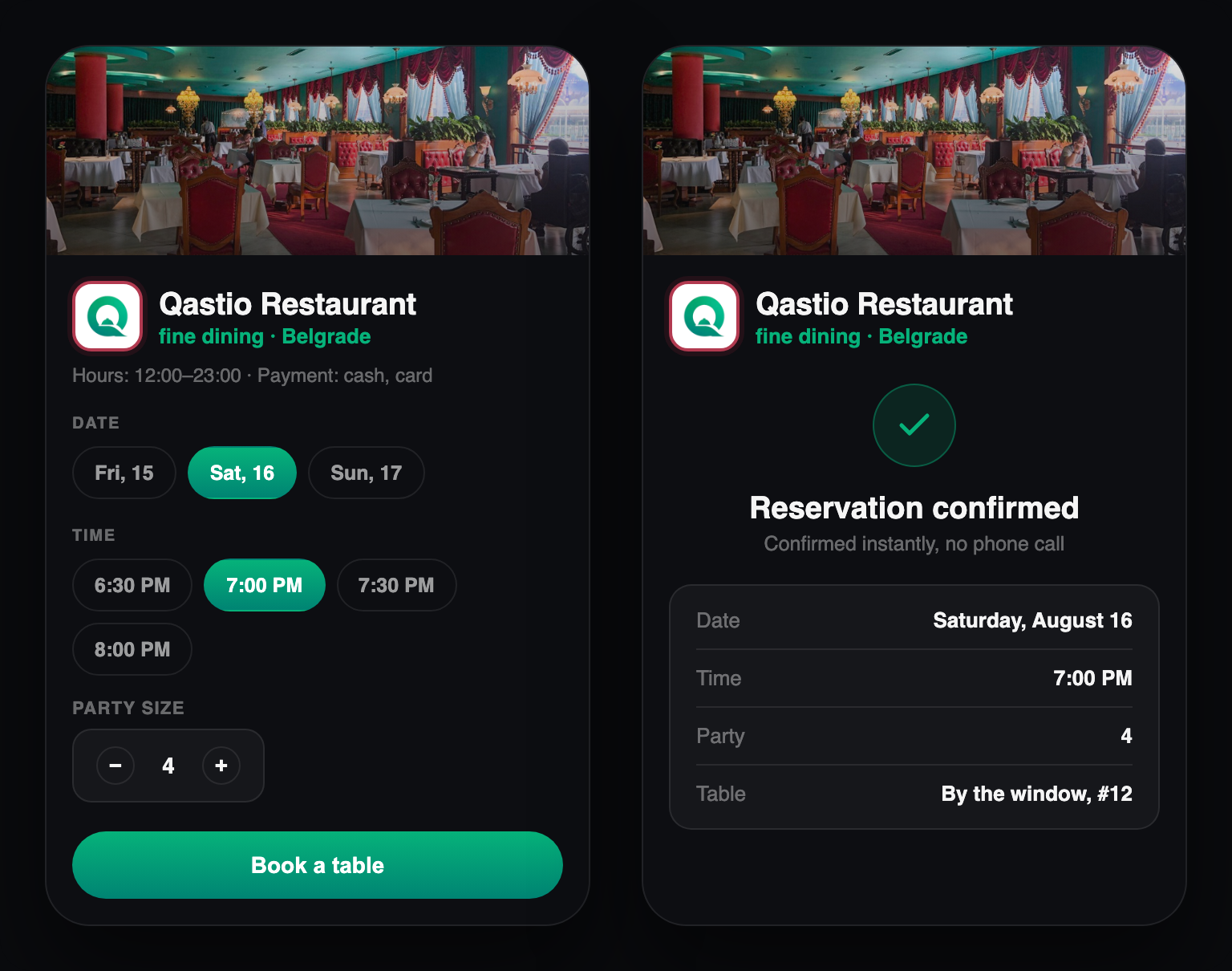
A classic phone reservation depends on someone at the venue being free to pick up — during a busy season that often means waiting on hold or a missed call. Booking through Qastio doesn't depend on that: the guest picks a date and a slot the system shows as open and sends the request; the confirmation arrives by email, with no waiting on hold. No account registration is needed either — the guest enters details for that one booking, and that's enough. Qastio processes those details on the basis of contract performance, not consent — as set out in the Privacy Policy v2.0, in force since 30 August 2026.
What happens once the guest arrives
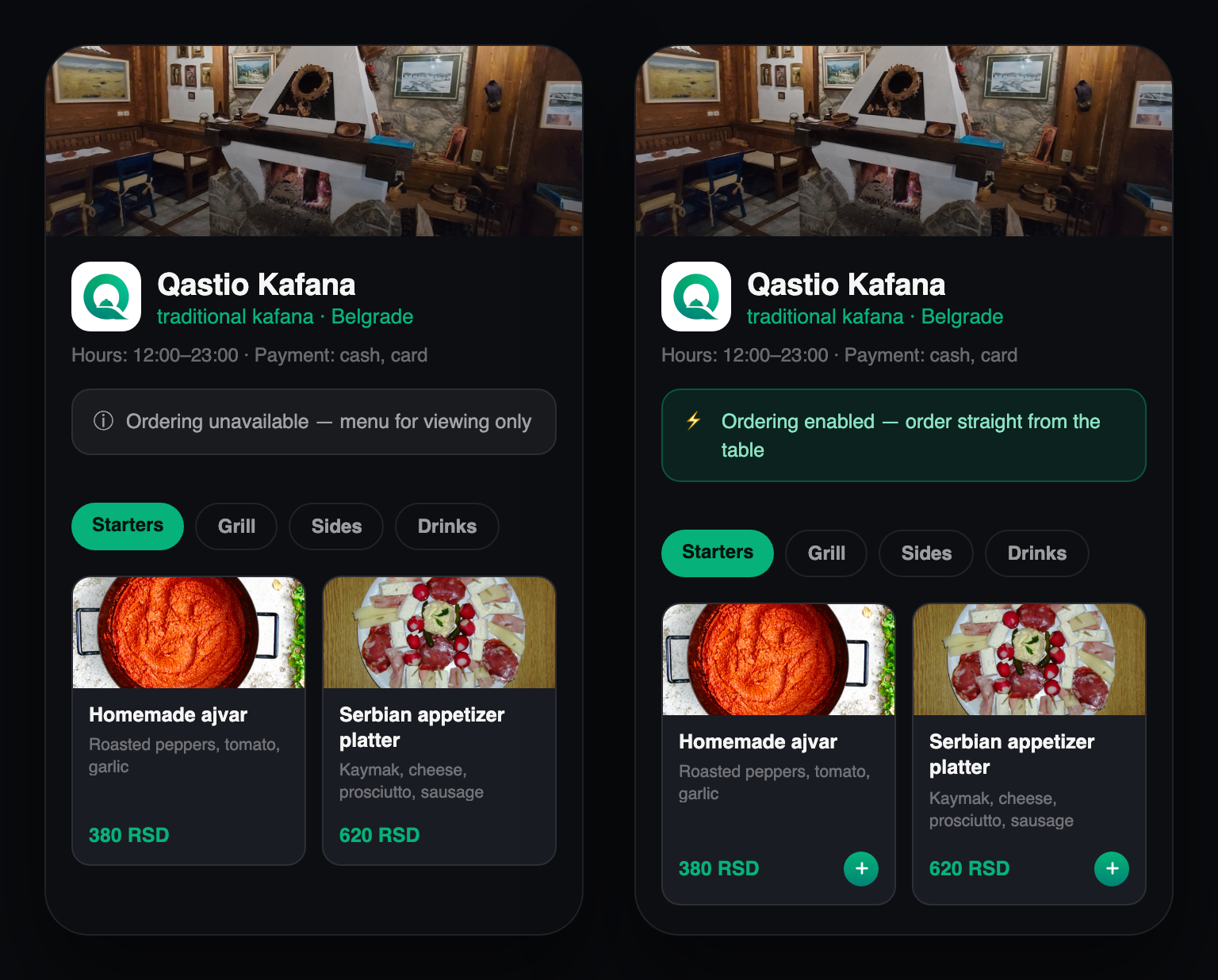
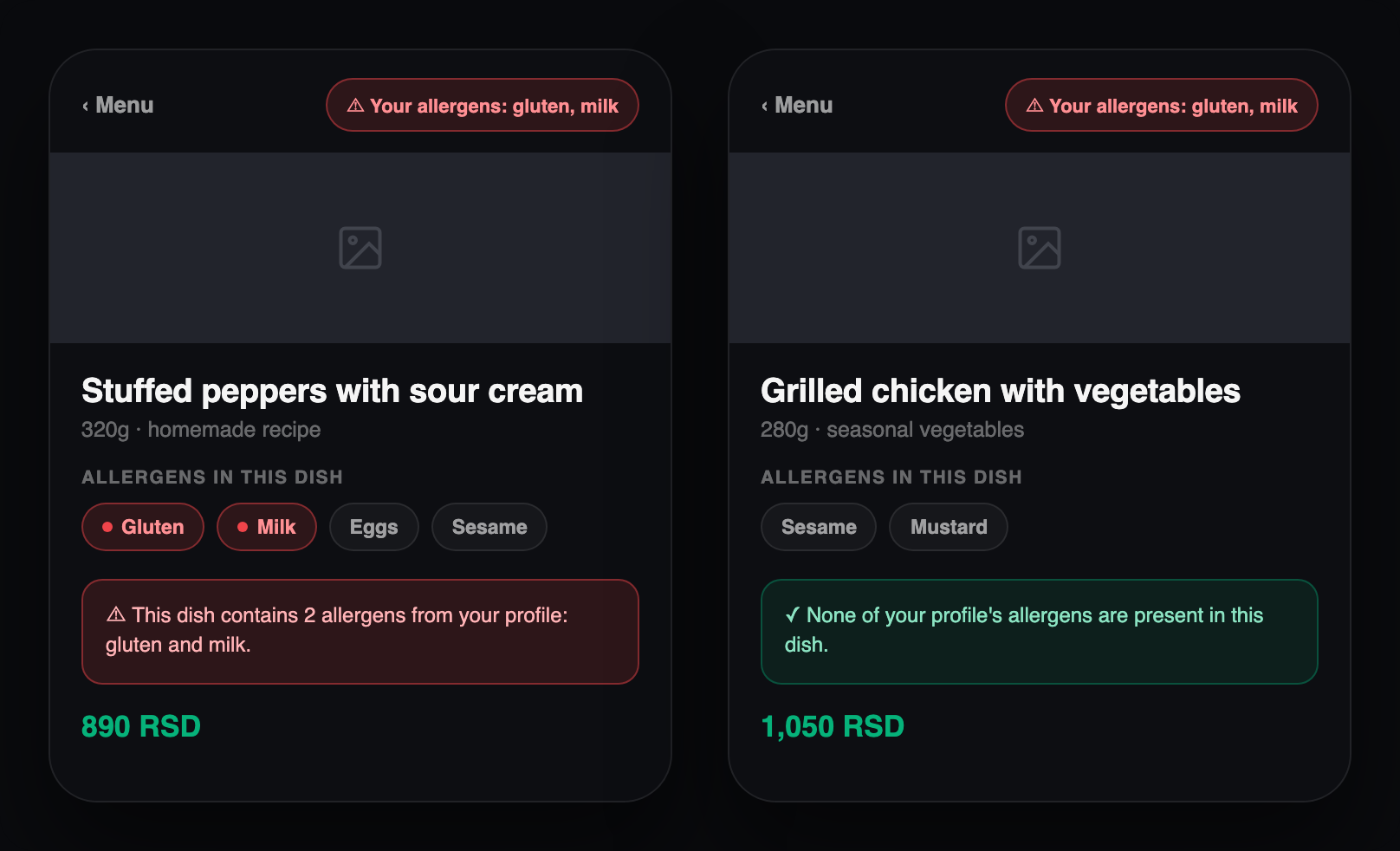
This is where the reservation differs from a booking-only tool: once the guest sits down at their reserved table, the same QR code that's part of that table opens the digital menu — in the guest's language, with allergens marked — and they can order right away. No switching to another app, no hunting for a paper menu on the table.
For the guest, it's one evening, not a reservation followed by a separate ordering step. The system should follow that logic, not split it into two tools.
For the venue: fewer missed calls
For staff, a reservation that doesn't depend on a phone call means fewer interruptions during a busy service and fewer missed bookings from a line that was engaged. Reservations are just one part of what a guest gets inside the same app — alongside QR ordering, which follows right after.