A guest with an allergy usually has two bad options at a restaurant: ask the server about every single dish and slow the meal down for the whole table, or not ask and take the risk. Qastio shows allergens right next to the dish, for every guest, with no extra step — and goes a step further for guests who save a profile.
The EU list of 14 allergens, not an arbitrary one
Qastio doesn't invent its own allergen categories. Labels follow the EU list of 14 major allergens, the same one restaurants in Serbia and the EU already use to declare a dish's composition:
- Cereals containing gluten
- Crustaceans
- Eggs
- Fish
- Peanuts
- Soybeans
- Milk
- Tree nuts
- Celery
- Mustard
- Sesame seeds
- Sulphur dioxide and sulphites
- Lupin
- Molluscs
The venue picks from this list for every dish, through the admin panel — not free text that would be hard to compare across dishes or menus. The full official list is set out in Regulation (EU) No 1169/2011, Annex II.
Available to every guest, no extra step
Allergen labels sit directly next to the dish's name and description, inside the same menu the guest orders through. Every guest sees this, no account and no setup needed — the information is there the moment the guest is considering the dish, not in a separate PDF they have to go find.
When a guest saves a profile: a warning right next to the dish
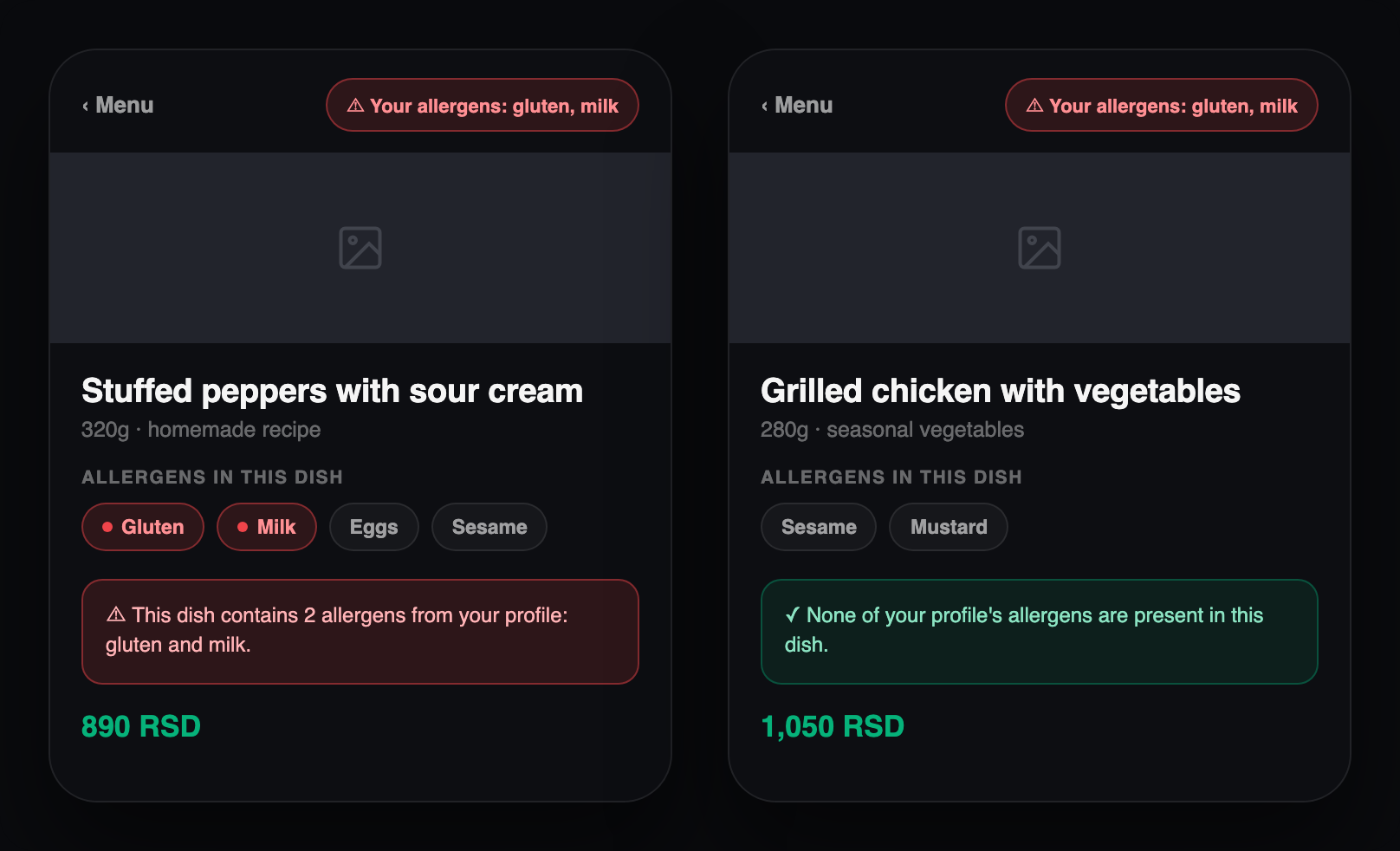
A guest who saves their allergens to a profile once gets more than a plain display: dishes containing at least one of their allergens are visibly flagged, with a clear warning next to the price and description. The guest doesn't need to re-read the ingredient list for every dish — Qastio has already checked the menu against their profile.
A guest shouldn't have to remember whether the "stuffed peppers" contain milk. They should see the warning the moment they open that dish.
Allergens travel with the order, not just on the guest's screen
Personalization doesn't stop at the warning a guest sees before ordering. When a guest with a saved profile sends an order, their allergens travel with it to staff and the kitchen — in every case, not only for dishes that happened to be flagged on the guest's own screen. The server and kitchen see the same information the guest saw, without the guest having to say it out loud or type it into a note.
Checking for allergens shouldn't stop with the guest reading labels. The same information should reach the people preparing and serving the dish.
Who enters the data, and why that matters
Labels are entered by the venue's own staff, dish by dish, through the admin panel. That means accuracy depends on the venue — Qastio doesn't guess a dish's composition automatically. That is also the formal position: under the Platform Terms, the venue is responsible for the accuracy of ingredient and allergen data, and Qastio doesn't verify it independently. When a venue changes a recipe or a supplier, updating one entry in the panel immediately changes what the guest sees, including the personalized warning.
Same language, same label
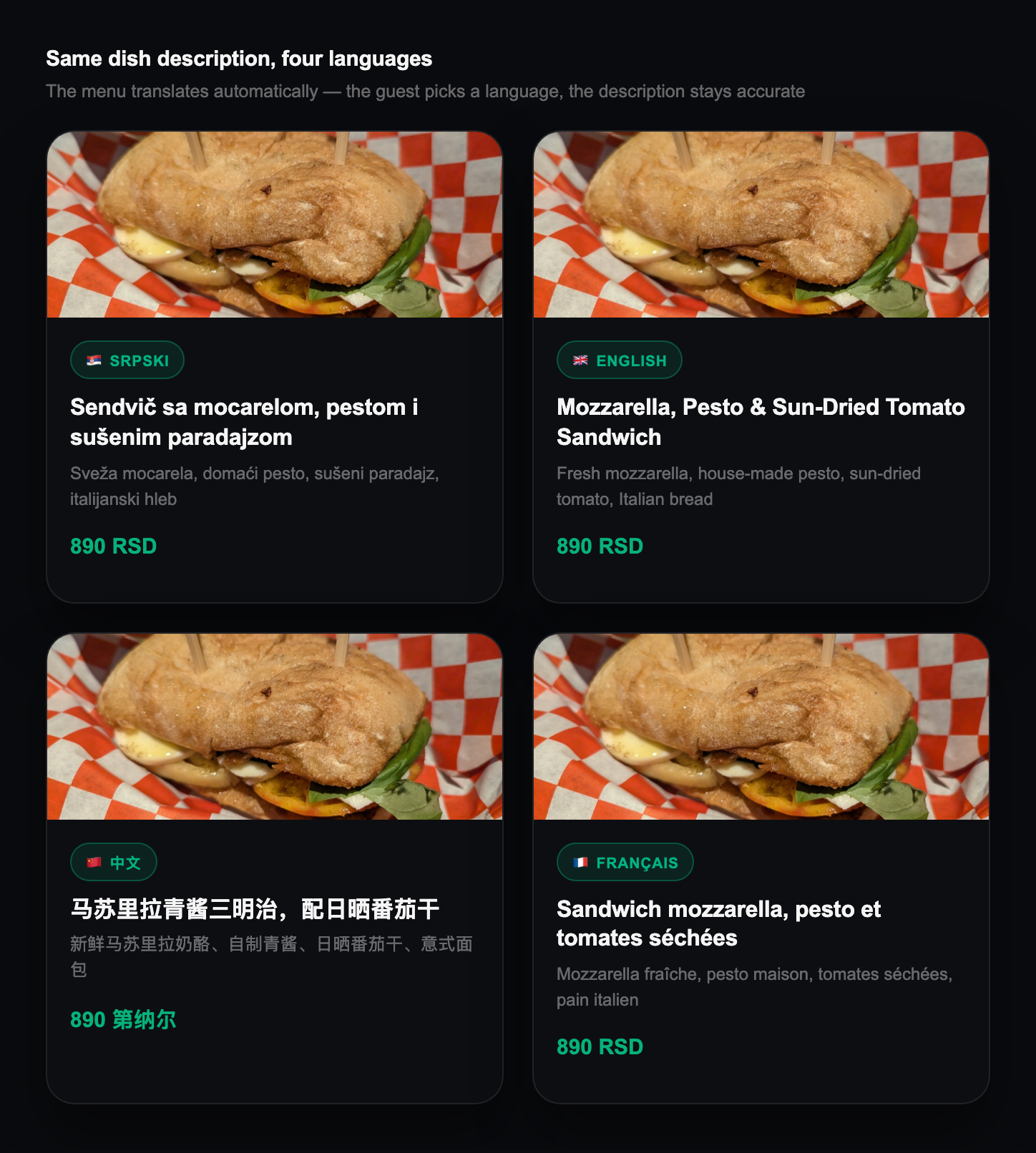
A guest reading the menu in English, or any other supported language, sees allergen labels — and the same warning — in that language, not only in Serbian. For a venue with tourist footfall, that means a foreign guest gets the same information as a local one.
What this isn't
The allergen display is a fast, first check — a useful tool, not a substitute for talking to staff about serious allergies or cross-contamination risk in the kitchen. A guest with a severe allergy should still confirm directly on-site.
This feature is part of the same flow as QR ordering and the multilingual menu — the guest doesn't switch to a different tool to see this information, it's right where they're already ordering.