A restaurant in central Belgrade regularly gets guests during the season who don't read Serbian — and a single-language menu means that guest either orders at random, relying on a photo or a guess, or asks staff to translate every item, slowing down the floor for everyone.
What changes when a guest understands what they're ordering
A guest who understands the description orders with less uncertainty and is less likely to send a dish back after realizing it wasn't what they expected. For the restaurant, that means less wasted food and fewer frustrated guests over a misunderstanding that a readable description could have prevented.
Translation that explains, not just translates the name
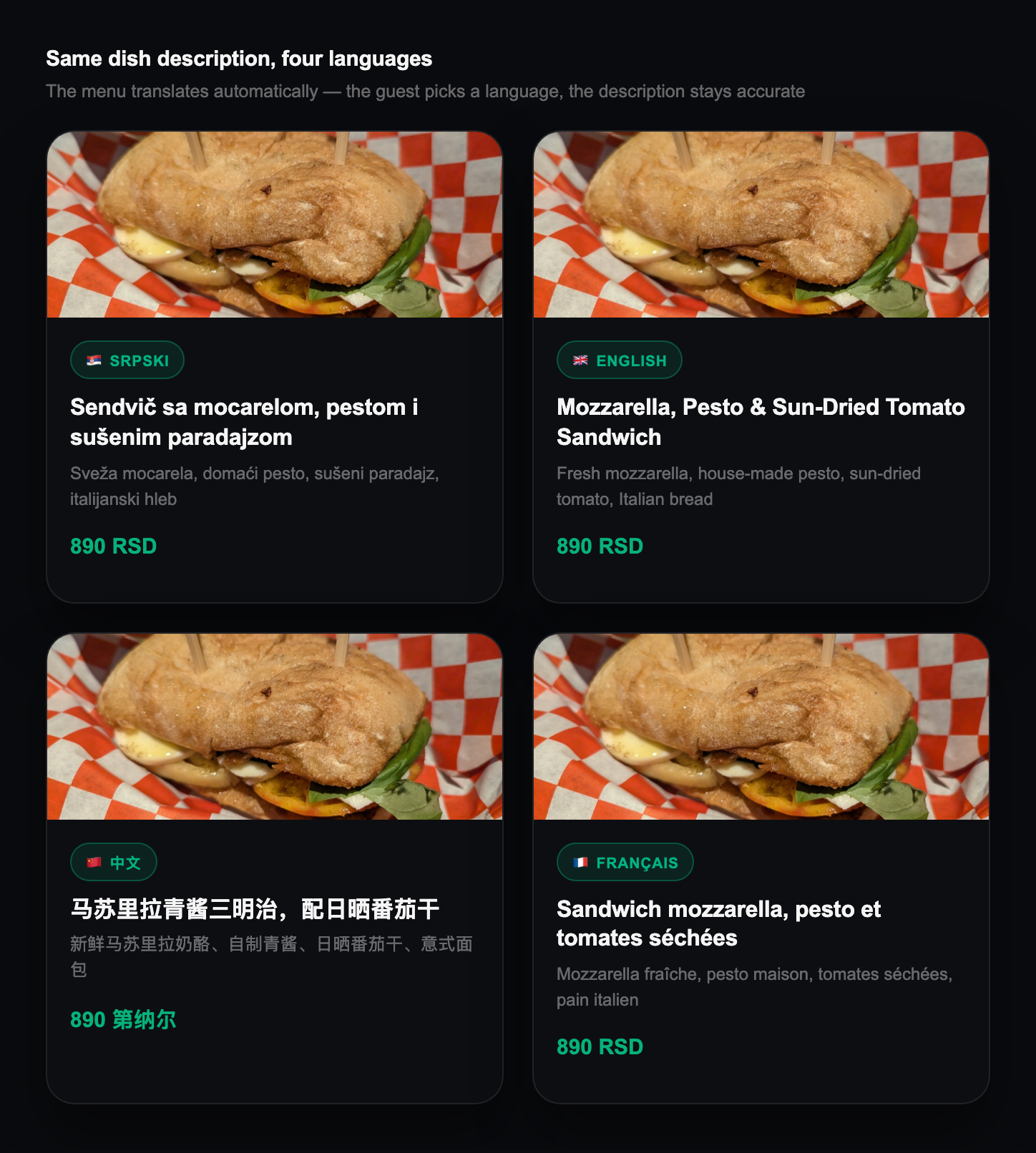
A literal translation of a dish's name often means nothing to a foreign guest — a local dish name translated word-for-word doesn't explain what it's actually made of. In the Qastio menu, the venue enters a dish description as well as its name, in every language it offers — the guest sees what the dish actually is, not just what it's called.
When English isn't enough
The menu doesn't stop at English. Serbia waived visa requirements for Chinese tourists as of 15 January 2017 (agreement between the Government of Serbia and China), so Chinese guests are a regular presence in Belgrade restaurants — and a menu translated only into English still leaves them guessing. The illustration at the top of this article shows the same dish description across four languages, including Chinese.
A guest doesn't pick a restaurant by how many languages the server speaks. They pick it by whether they understand what they're ordering.
Why Belgrade specifically
Belgrade has a steady flow of tourists year-round, not just in high season — business travelers, transit passengers, groups exploring the city. A restaurant whose menu doesn't speak their language loses part of that audience before they even sit down, regardless of how good the kitchen is.
A guest shouldn't need fluent Serbian to enjoy a meal. They need a menu that understands them.
Part of the same system, not a separate tool
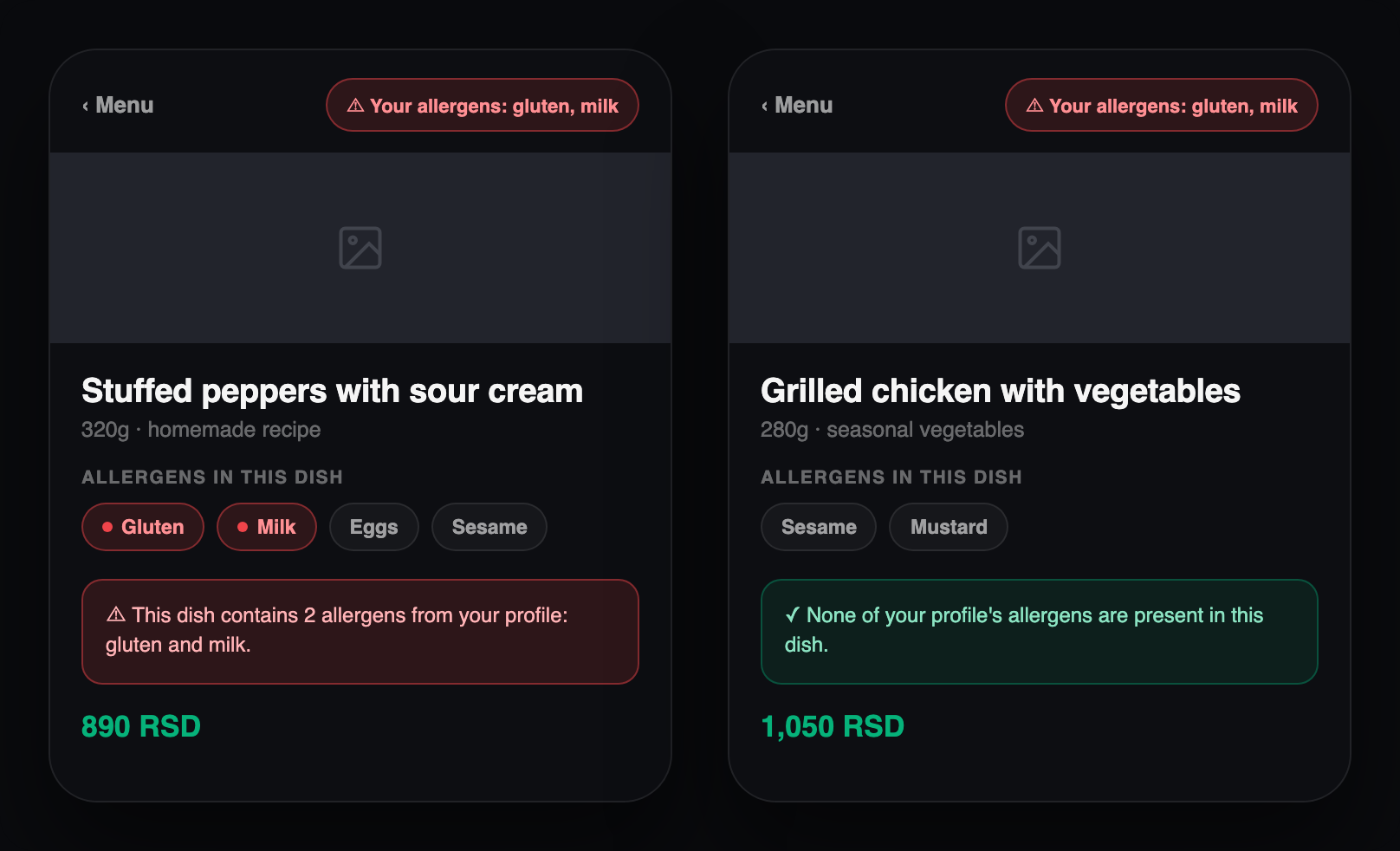
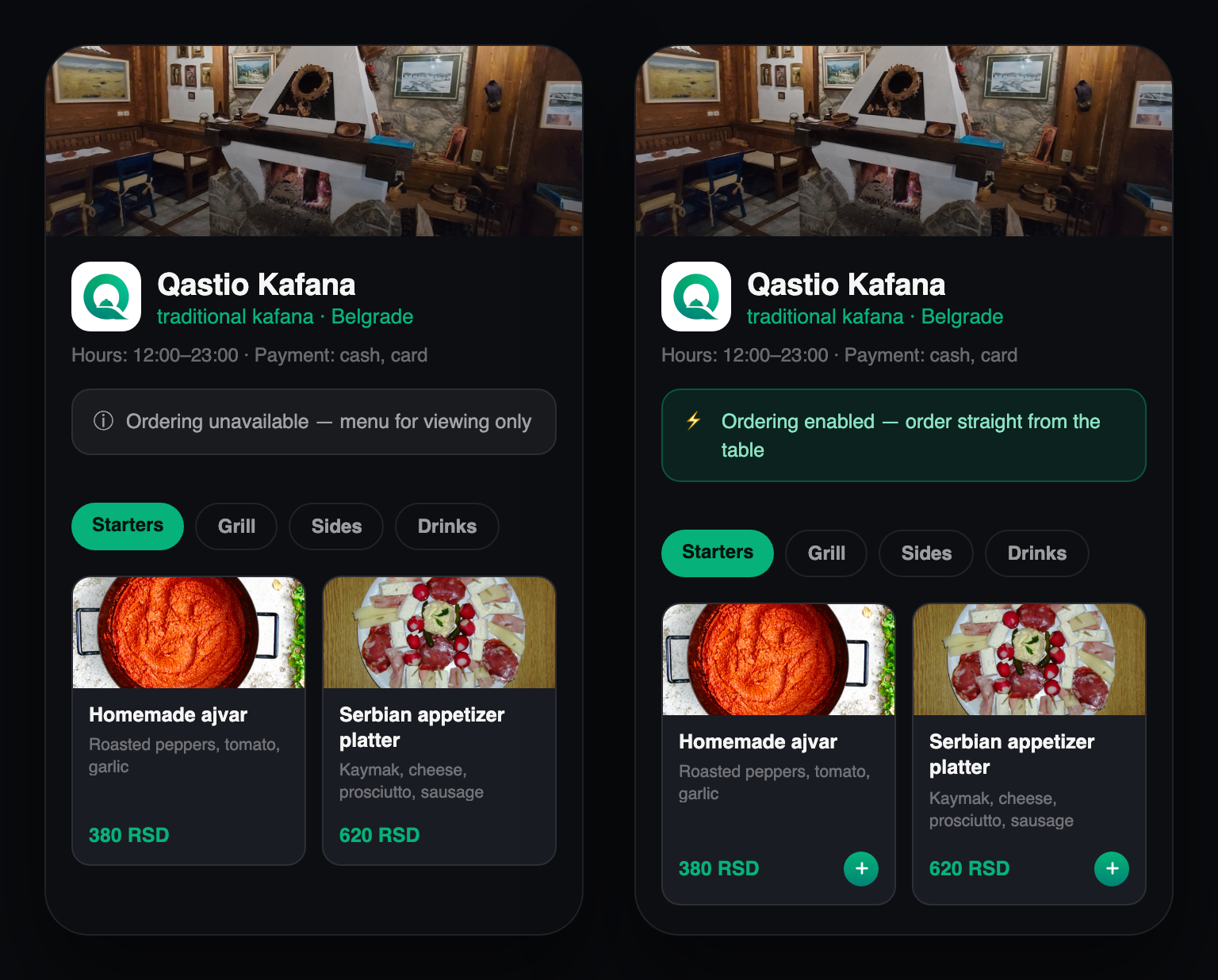
What sets this apart from a standalone menu-translation tool is that translation isn't the end point here — it leads straight into ordering. A guest who reads the description in their own language orders right through the same screen, with allergens shown next to every dish. The venue doesn't run a separate translation tool alongside a separate ordering tool — one system covers both.